Wellington boots are an awkward parcel. They are heavy, they keep their shape, and a pair that looked perfect on screen can arrive tight across the instep or short in the calf. Returns happen. What separates a refund in a week from a refund in a month is rarely luck — it is a handful of small things done properly on the day you box them up.
Below is the sequence that works, from the moment you decide the boots are going back to the moment the money reappears in your account.
Find the return window before you touch the tape
Retailers set their own deadlines, and they are not generous by accident. Fourteen, twenty-eight and thirty days from delivery are all common, and a few count from the order date instead. Log into your account and read the actual order page rather than trusting your memory of the policy.
Two things are worth knowing here. First, if you bought online, consumer law in the UK and across the EU generally gives you a 14-day right to cancel from the day the boots arrived, on top of whatever the retailer offers on its own website. Second, faulty goods sit in a different category altogether: your rights there usually last for years rather than weeks, and they are not cancelled out by a 30-day returns policy.
If you believe the boots are faulty, say so plainly in your return request. Describing a split seam as a change of mind quietly puts you in the goodwill lane, where the rules are stricter. Where money or a legal position is genuinely at stake and the retailer disagrees, take advice from a consumer advice service or a qualified adviser rather than guessing.
Read the condition rules — they decide the outcome
Return policies hinge on condition, and "condition" means different things depending on why the boots are going back.
Faulty boots
You are allowed to inspect them and find out what is wrong. Photograph the fault in daylight, close up and in context, before you clean anything. Mud on a sole does not erase a manufacturing defect, but a clean, dated set of photos makes the conversation much shorter.
Unwanted boots
Here the bar is higher. Most retailers want them unworn outdoors, with tags attached, in a resaleable state, and ideally in the original box. Walking the dog in them first usually ends the argument before it starts. Keep the packaging inserts, any spare laces and the little card that came in the box — those small parts are often the first thing to go missing and the first thing a returns team checks.
Pack them as boots, not as a parcel
A pair of wellies can weigh two kilos or more, and a single boot dropped into a thin mailing bag will burst it. Build the parcel in layers:
- Reuse the original box if you kept it. If not, a sturdy outer carton is better than the branded box on its own.
- Bag each boot separately so grit from one sole does not scuff the other.
- Wrap each boot in paper or bubble wrap and fill the gaps so nothing slides.
- Tape every seam, including the base, with proper packing tape rather than a strip of sticky tape from a drawer.
- Never post boots in the manufacturer's box alone. Labels and scuffs on the branded box can be treated as damage to the goods.
Before sealing it, check the obvious: two boots, the correct size, nothing else of yours inside, and the returns paperwork included if the retailer asked for it.
Printing and attaching the label
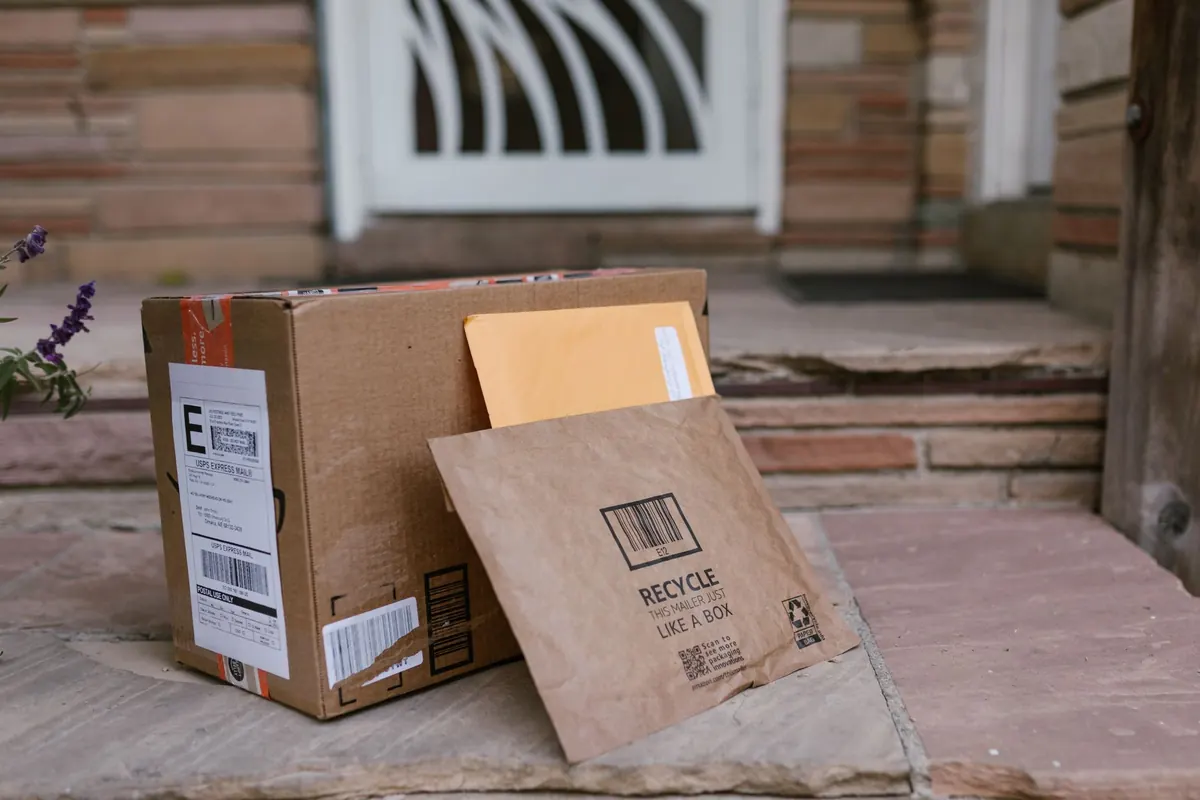
Print the label at the size it arrives in — do not let your printer shrink it to fit the page, because the barcode can stop scanning. If you have no printer, most couriers and retailers now offer a QR code you show at a drop-off point, or a print-in-store option.
Cover any old labels and barcodes completely. Attach the new label flat, with clear tape, and avoid layering glossy tape over the barcode where it creases or glares. Keep the second copy of the label, and if the retailer supplied a returns note, put that inside the parcel as instructed.
Keep proof of postage — all of it
This is the step people regret skipping. A counter receipt is not the same as tracking, and a photograph of a parcel on your kitchen table is not proof you posted it. Collect three things:
- The printed receipt from the counter or drop-off point, showing the date and the destination.
- The tracking number, written somewhere you will find it again — a note on your phone is fine.
- A photo of the sealed, labelled parcel, taken on the day it leaves your hands.
For an expensive pair, use a tracked or signed-for service. The extra cost is far less annoying than losing a refund because the parcel vanished between two depots.
The two-minute check before you leave the house
Boots cleaned and dry, both present and correct, packaging and inserts included, fault photographed, label printed at full size, returns note inside, parcel taped at every seam, receipt requested at the counter. If all of that is true, you have done your part.
After the parcel has gone
Set a reminder for fourteen days. If the refund has not appeared or you have heard nothing, follow up by email rather than phone, quoting your order number, the tracking number and the date you posted. Written trails are easier to escalate than a conversation someone half remembers.
If the retailer stops replying, your card provider or payment service may be able to help with a disputed transaction, and a consumer advice service can explain your options in plain terms. Keep the receipt, the tracking number and the emails together until the money is back — then you can finally shut the tab on those boots.
Photo: RDNE Stock project / Pexels