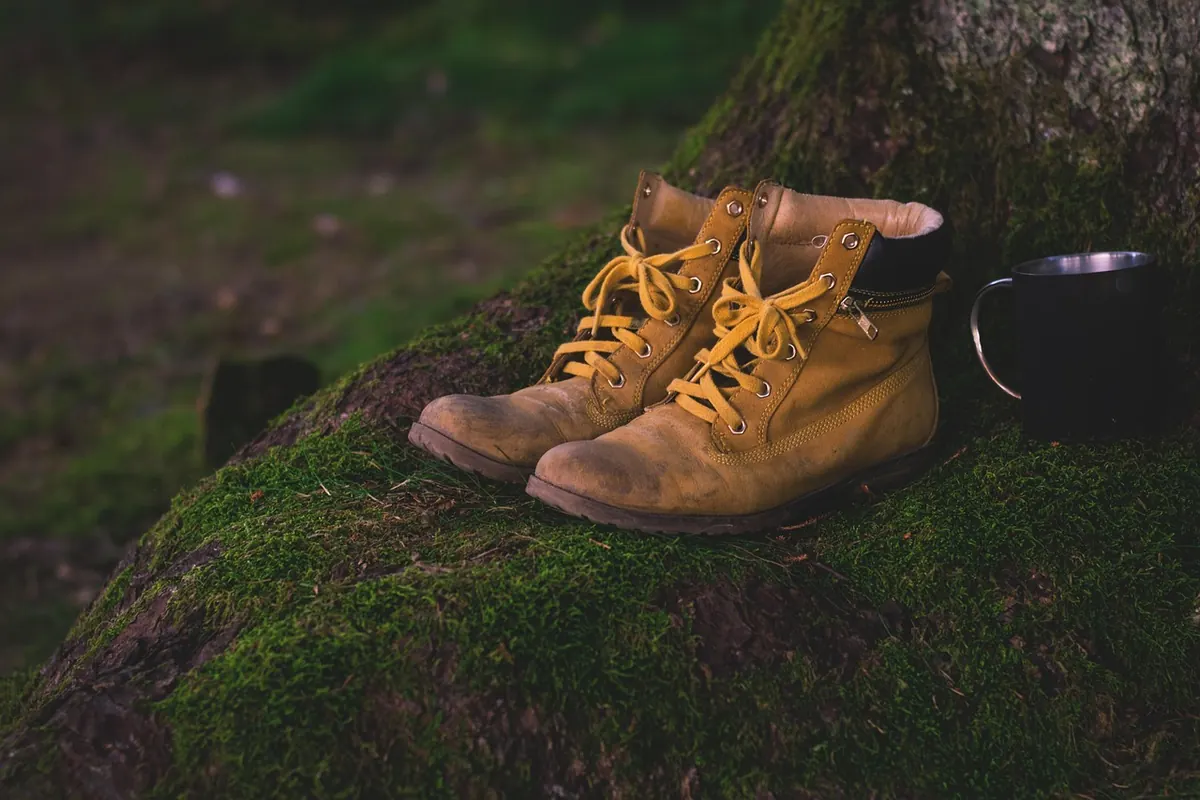
A pair of boots is one of the odder things you can hand to a courier. They are heavy for their size, they refuse to sit flat in a box, and a muddy sole can cause trouble for every other parcel sharing the van.
None of that makes sending them difficult. It just means a handful of small decisions early on — the right box, an honest measurement, a label that survives the journey — save money and a lot of emailing later. Here is the whole process, from the first measurement to the moment the driver takes the box off your hands.
Why Boots Make Awkward Parcels
Couriers charge on two things: how much a parcel weighs, and how much space it takes up. Boots do badly on both counts.
A pair of leather work boots can weigh more than a box of paperbacks twice their size, and because they will not squash into a neat rectangle, they usually end up in a box that is half air. That air is what you pay for.
Then there is the dirt. Boots arrive home with grit in the tread, dried mud on the heel and sometimes a damp lining. A wet or muddy parcel can be refused at the counter, and mud that flakes off in transit can spoil someone else's order. Before anything else, knock the soles out over a bin, brush the uppers, and give them a full day to dry if they are damp.
Packing Boots So They Arrive Intact
Padding a boot is not about making the box look tidy. It is about stopping the leather from creasing and the soles from rubbing a hole in the cardboard.
- Dry first, always. Damp leather sealed in a box for two days is a bad combination. Let them air overnight.
- Wrap each boot in a plastic bag, a sheet of bubble wrap or tissue. Bag the soles separately if any grit is left in the tread.
- Fill the inside. Crumpled paper or bubble wrap in the shaft and toe holds the shape and stops the boot folding in on itself.
- Use a sturdy box. A double-wall box is ideal. A thin shoe box with tape wrapped around it will not survive a sorting belt.
- Fill the gaps. Two or three centimetres of padding on every side, and nothing that rattles when you shake it.
- Tape the seams. One strip down the middle of the top, one along each edge. Remove old labels and barcodes first.
Putting the original shoe box inside a bigger outer box looks professional, but it doubles the space your parcel takes up. If the boots are already wrapped well, a single well-padded box is usually the cheaper choice.
Measuring the Box the Way Couriers Do
Measure the outside of the box at its longest, widest and tallest points, and write the numbers down in centimetres. Do not measure the boot or the shoe box; the courier charges for the parcel you hand over.
Then work out the volumetric weight, because most courier networks do. The usual formula is length × width × height in centimetres, divided by 5,000. A box measuring 40 × 30 × 20 cm comes to 24,000, which gives a volumetric weight of 4.8 kg. If the boots inside weigh 2.5 kg, you will be billed for 4.8 kg. That is why a snug box beats a generous one: empty space is billable.
Keep the box close to the boots
Use the smallest box that fits the boots plus padding — not the smallest box that fits the boots. Tall boots may force you into a long, narrow parcel, and some services measure those by length plus girth rather than simple volume, so trim the length as far as the boots allow.
Weighing the Parcel at Home
If you do not own parcel scales, a bathroom scale works well enough. Weigh yourself, then weigh yourself holding the box, and subtract. Do it twice and take the higher reading. Kitchen scales are fine for a single boot, as long as it fits on the platform — double the figure and add the box and packing.
Round your final weight up rather than down. If your scale says 3.1 kg, declare 3.2 kg. Depot scales are not going to be kinder than yours, and a parcel that turns out heavier than declared can be held for extra payment, which is a slow way to learn the lesson.
Now compare the actual weight with the volumetric weight from the previous step. The courier charges whichever is greater, so know both numbers before you compare quotes.
Labelling and Booking Without Mistakes
Labels fail for boring reasons: a crease across the barcode, a corner lifting at the edge of the box, tape that reflects the scanner light.
Getting the label right
Print the label if the courier provides one. Stick it to the largest flat face, well inside the edges, and smooth it down with clear tape so the barcode sits flat and legible. Avoid coloured or reflective tape over the barcode. Write the delivery postcode on the box in marker as a backup, and drop a slip with both addresses inside the parcel.
What to have ready when you book
- Collection and delivery postcodes
- Box dimensions in centimetres and the declared weight
- A phone number or email for the recipient
- A plain contents description, such as "one pair of leather boots"
Then read the small print on cover. Most services include only a modest amount of compensation as standard, and that figure may be less than the boots are worth, so add extra cover if it matters. If you are sending abroad, check the destination's rules on used clothing and footwear before booking, and fill in the customs form honestly — an accurate description clears a border faster than a vague one.
Handover Day: A Five-Minute Check
Run through this before the driver arrives or you leave for the drop-off point:
- Boots clean, dry and padded.
- Every seam taped, old labels removed.
- Label flat and readable, not wrapped over a corner.
Photo: LUM3N / Pixabay